

looking up, around, and within
the wonder of nature and where it finds us

Do you ever look up at the trees and wonder? That is what I have been doing for the past week. The mistletoe growing on a tree outside my work came up twice in two different conversations last week, and they both brought unique perspectives. They spotted it growing because of the lost leaves from the winter season. I didn’t even notice it before as I don’t usually look up in the trees outside the window when I’m working. I also wasn’t aware that mistletoe grew where I lived.
Which is sad, really. I love nature and I crave to be in the sunshine—touching the grass, hearing the birds sing and the wind rushing through the leaves. I miss being a kid and building a clubhouse with siblings and neighbors out in the woods under the wisteria-covered trees, using fallen tree limbs and wildflowers to construct our secret hideout. The scent of damp earth after a fresh rain, the sensation of mud squishing between my toes, and the sight of water beading on the leaves makes me feel human and wonder about how it all works. We made mud pies and foraged for wild mushrooms and strawberries hidden in the lush grass of summer. The line of ants tracing their footsteps created shapes on the driveway while our own feet were warmed by the pavement through the afternoon sun.
Now that I’m older, I don’t spend as much time outside absorbing nature’s scents and sensations. I don’t sit outside and just observe all the tiny miracles of life happening around me nearly as much as I used to. Even now in the wintertime, I avoid being outside due to the cold. I miss it dearly.
The first person at work to point out the mistletoe to me mentioned that the shape of mistletoe looked like lungs in the way it grows, expanding from one branch to another, much like the tree itself. She mentioned how it’s all connected or at least that’s what she said she believes. It’s interesting how their shape forms so similar to the shape of our lungs—what we use to absorb the air it transforms and provides for us.
Another person a few days later noticed the mistletoe and told me that it grows white berries (I had no idea!) which are highly poisonous. He said the birds eat the berries and spread them. Again, the birds connecting nature to itself as it goes about its life, much like we connect to the trees through the air. This made me realize that I do not pay enough attention to the natural elements around me. I wanted to learn more about it since my only knowledge of mistletoe was the traditional Christmas kiss.
I spent some time researching mistletoe afterwards in my commonplace journal. I recently made a new notebook where I included a section to write research about the nature I encounter in my every day life or when I travel. I want to feel more in tune with the natural elements around me as I believe in a spiritual connection between humans and nature. It’s also a form of meditation for me to be surrounded or focused on plants and animals, so this process was meant to be an unwinding activity for me as well. I want to take the time to sit and notice.
I found out there’s so much more to mistletoe than I originally thought. Apparently, the kissing under mistletoe tradition dates back to 2000 years ago likely from Celtic druids as they saw mistletoe as a symbol of life and fertility. Mistletoe can also be tied back to Norse mythology when the goddess Frigg made it a symbol of peace and love.
Although mistletoe has romantic roots of origin, it is a parasitic plant that feeds from its host, usually trees. As mistletoe relies on the host plant for water, it can be damaging to trees, especially those with large amounts. Mistletoe is hard to spot in trees unless in the wintertime when the leaves are bare so it might be too late to catch the overgrowth before it takes over the tree.
Mistletoe produces yellow flowers and small white berries made with a sticky consistency. The berries burst when ripe and attach onto fur and feathers of passing animals to be carried to other parts of the tree or region. The parasitic plant does benefit nature as it provides as a major food source for a number of birds and some mammals. The flowers feed bees and the twigs and leaves are used by hawks and owls for nesting habitats. Three butterfly species are completely dependent on mistletoe to complete their life cycles.
My research on mistletoe surprised me because I didn’t know of its parasitic nature. Although this plant is harmful in large amounts, it is still a critical part of life for many small insects and birds. The give and take of nature in its perfect balance always amazes me.
It’s unfortunate how nature works around us constantly and we are too busy to look up and notice. I rarely take the chance to sit down and learn about what’s growing and living alongside me. Now, when I look up in the trees at that mistletoe outside my work, I feel connected to it somehow. Because I know it, understand it, and appreciate what it does for the world around me.
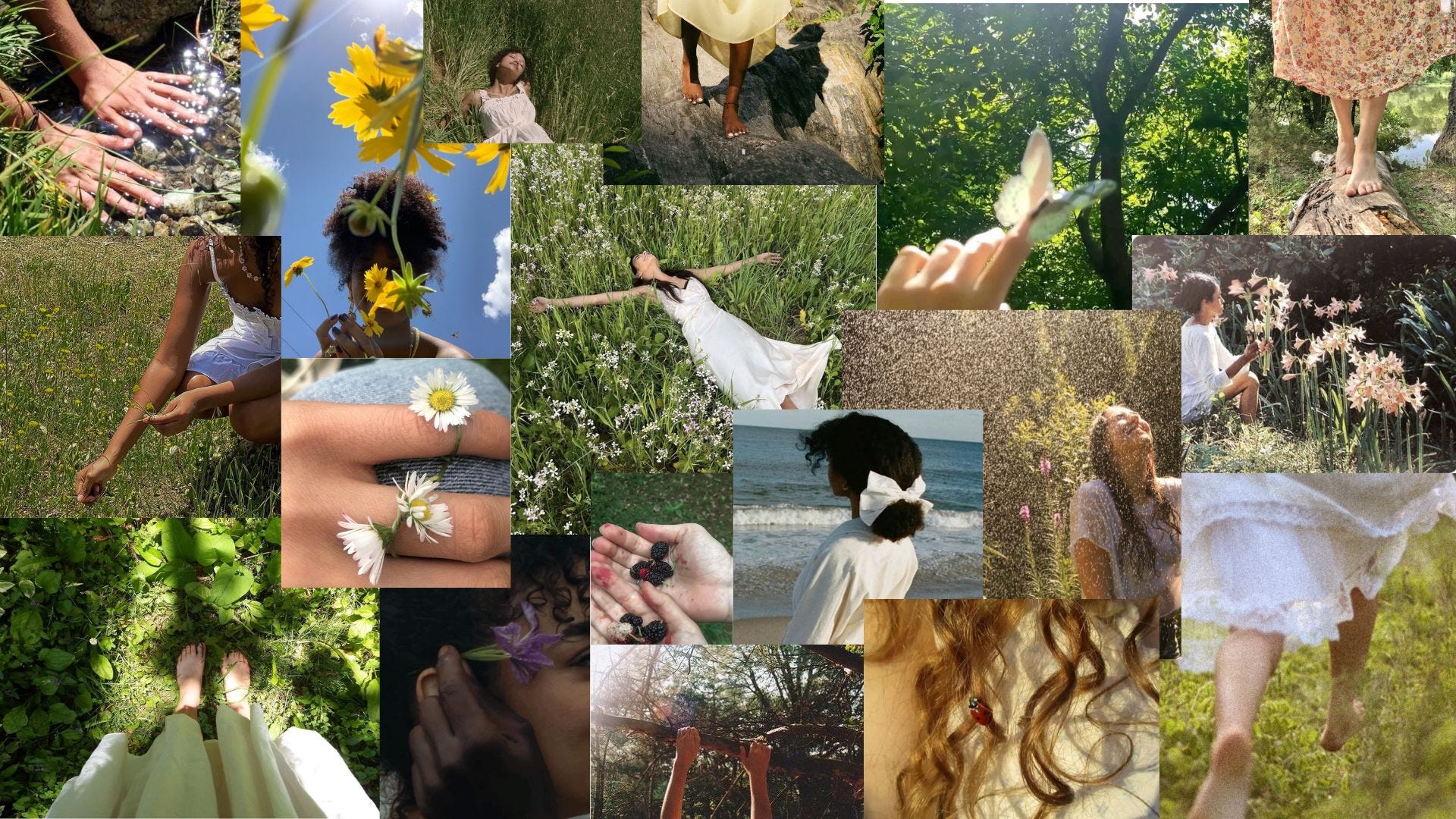
My advice to you, as spring emerges, pay closer attention to that tree you pass by every day on your walk to school, or that climbing plant that grows outside your window at work. That bird you always see on your lunch break? She has a story too. Take back your childhood wonder and fascination of nature. Go get your hands dirty in the mud by planting a vegetable garden, feel the tree sap stick to the palms of your hands as you climb a tree, breathe in the scent of the new flowers blooming around you this spring. Take advantage of the sunshine and go outside as the days get warmer. Make a flower crown with the small yellow butterweeds, feel the cold water of the creek brush between your fingers, make a wish by blowing a dandelion into the promising wind of spring. There’s so much to learn and to bring us closer to nature. Don’t forget where you came from: the miracle of nature exists in you too. The natural world has always been magical and it will always be a gift to explore and cherish while we still have some time left here on this beautiful planet. Take some time this week to look up, around, and within.
With love,
L.L.
I've heard about the parasitic nature of mistletoes but didn't know that some lives depend on it. But then that's what it's always like in nature, isn't it, that there needs to be a balance. Like you say, we can learn so much from it, be it its story or biology or just learning to be mindful when bathing in it. I love being in nature and with spring, I can't wait to make more time to go outside again. Lovely post! <3
These mistletoe facts will infact never leave my brain now. Fascinating! Great post :)